

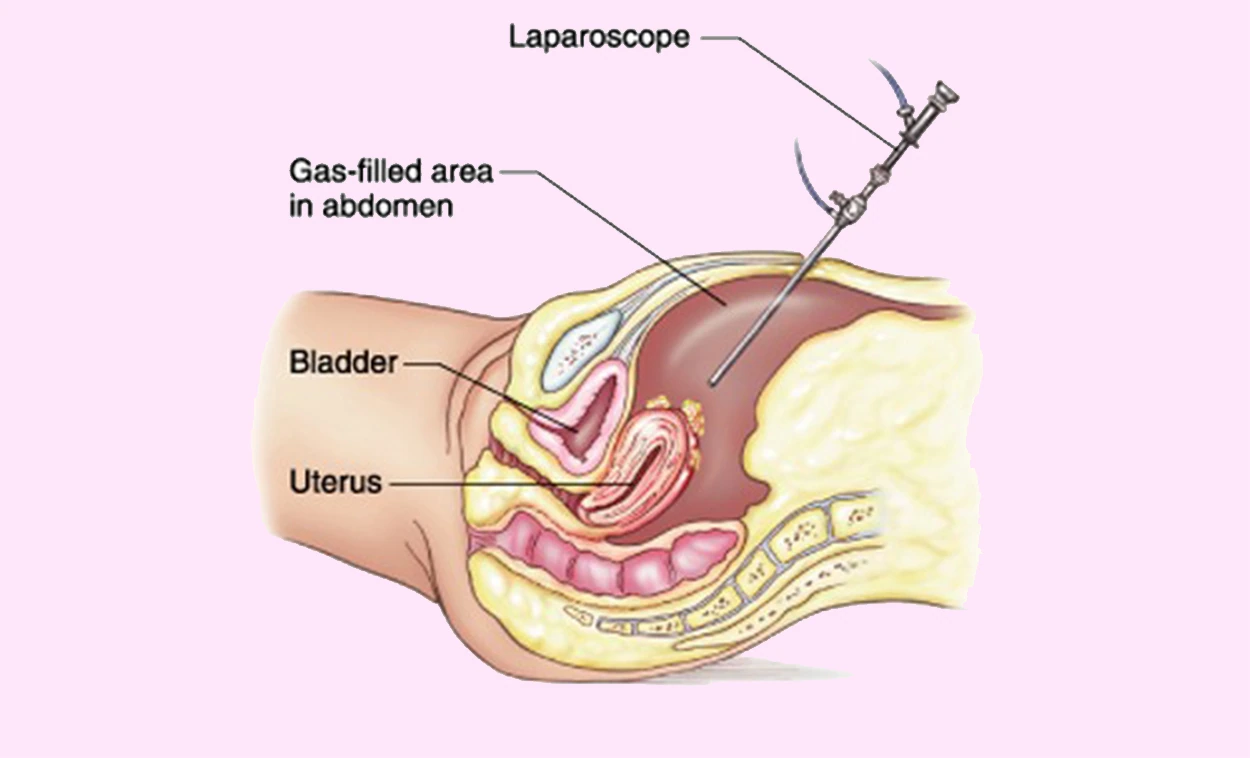
Laparoscopy is a common diagnostic and surgical procedure for infertility and other conditions. Laparoscopy for infertility usually involves making two small incisions, one at the pubic hairline, and the other at the navel. The laparoscope, which is a small telescope-like device, is inserted in one opening and surgical tools are inserted in the other.
The laparoscope allows the fertility specialist to visualize the internal organs, including the ovaries, uterus, tubes, and other structures. Many complex surgeries that once required opening the abdomen (laparotomy) are now performed using the laparoscope, which is an outpatient procedure. There is little pain associated with a laparoscope and the recovery time is very short. It also costs less compared with other procedures.
A reproductive endocrinologist/fertility specialist in India should perform the diagnostic laparoscopy. Fertility specialists have years of advanced training performing delicate microsurgical procedures. One major reason for choosing a specialist is that many conditions, such as endometriosis, can be treated during the diagnostic laparoscopy, thus eliminating the need for a repeat procedure.
Scar tissue can form following any surgery, and is especially problematic if the scar tissue forms on reproductive organs such as the fallopian tubes. This is another reason why a fertility specialist should perform the laparoscopy, as they are experienced in avoiding this complication. Our Fertility Center has board certified infertility specialists with extensive experience performing laparoscopic procedures for a vast array of gynecologic conditions.
A hysteroscopy is a procedure used to examine the inside of the womb (uterus).
It's carried out using a hysteroscope, which is a narrow telescope with a light and camera at the end. Images are sent to a monitor so your doctor or specialist nurse can see inside your womb.
The hysteroscope is passed into your womb through your vagina and cervix (entrance to the womb), which means no cuts need to be made in your skin.
A procedure called dilatation and curettage (D&C) used to be common to examine the womb and remove abnormal growths, but now hysteroscopies are carried out instead.